Search This Blog

Showing posts with label Mosrite. Show all posts

Saturday, October 15, 2022

MOSRITE: Fuzzrite, Silicon Version

After spending some time on the germanium Fuzzrite, time for a bit of silicon action.  It's a bit less interesting, as there seems to be less variance to the circuit - or none?  

Some differences in construction methods occurred, but that's about it as far as I can tell.   Although I need to do a bit more research on this, as I'd like to see some pot values on an original to confirm what the internet has been saying.


POTS

It seems that most people have settled on 350k for Depth, with was a common value used in Mosrite guitars at the time and also used in the germanium version, so this seems likely.

I've seen a few different values for the Volume pot floating around - anywhere from 33k to 500k.  The value of the Volume pot has a direct effect on the frequency response of the pedal.

The differences in values show up the most when the Depth pot is set to Q1 (Depth blends between Q1 & Q2).   A smaller volume pot reduces bass in this setting.


Even changing from 33k to 50k for volume affects the frequency response


THE 22K RESISTOR

There's still conflicting information floating around about the inclusion of the 22k resistor that forms the 3.3khz high-pass filter with the 2n2 capacitor on Q2.  Some people like to have it on a switch or change the value to 47k

The chart below used identical settings to the one above - except that the 22k resistor was removed.  As you can see, it significantly changes the frequency response and output level.


TRANSISTORS

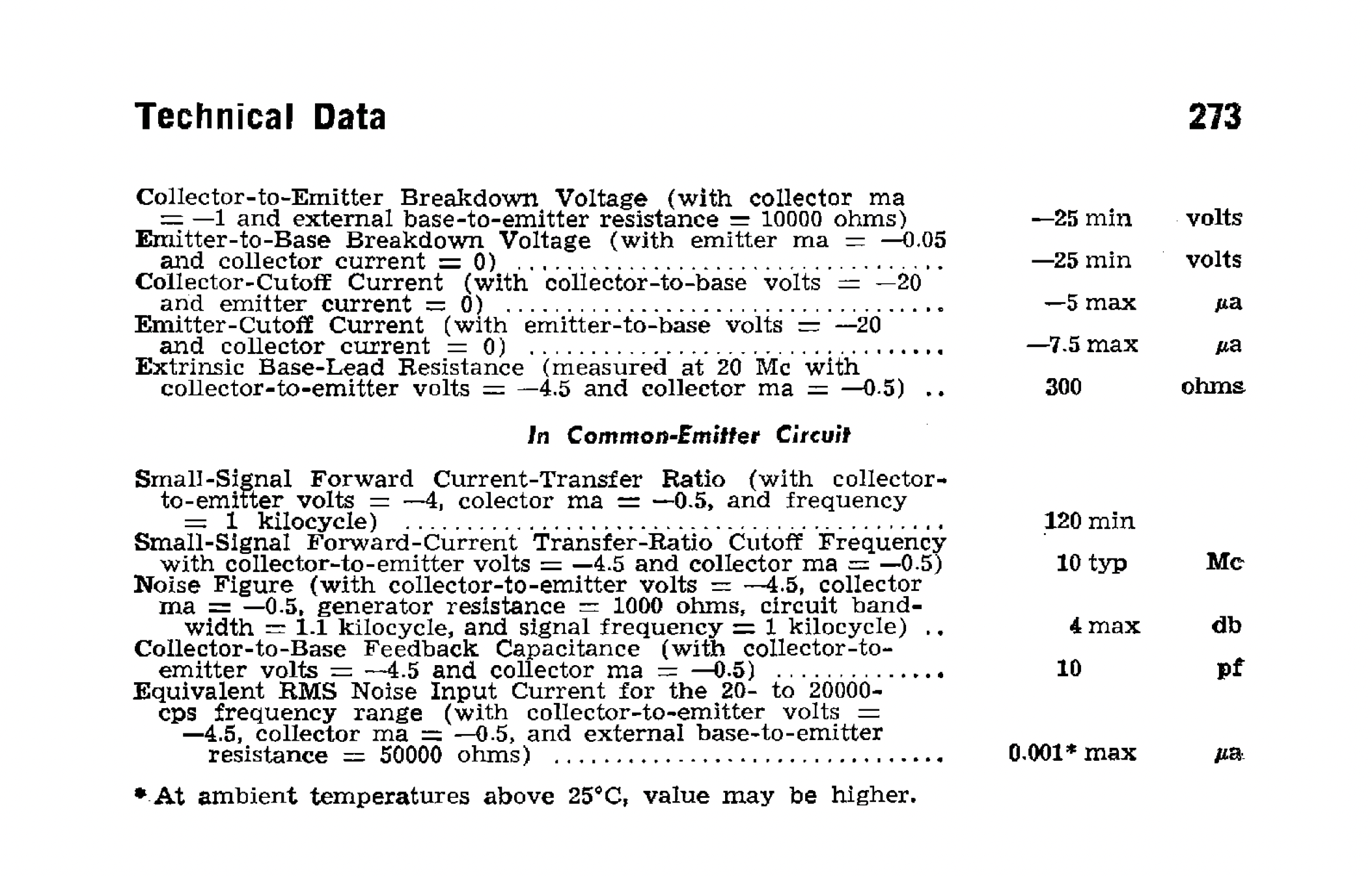
The original used TZ82, which if you find any will probably cost a lot.  The general consensus is that almost any low-gain silicon transistor will provide good results (about 200 hfe and under).  

Usually, people report good results with Q1 having a higher hfe than Q2.  

Modern subs PN2222A, 2N3903


MOSRITE: Fuzzrite

I think you can see where I was going with this Fuzzrite layout - visually satisfying on top, quite the mess underneath, but who's going to see it once it's in a box?  It is a good looking board when finished.


MOSRITE FUZZRITE - TAG BOARD LAYOUT

MOSRITE FUZZRITE - TAG BOARD LAYOUT


Wednesday, October 12, 2022

MOSRITE: Fuzzrite, Germanium Version

There are more than a few versions of the germanium Mosrite Fuzzrite out there - seems like they went through a few different construction technics and capacitor combinations along the way.  The details mostly seem to be lost to time (and rust).

Here's a bit of info that I've pulled together from various sources while I was trying to work out what was going on with all the variations.  


STANDARD MOSRITE FUZZRITE SCHEMATIC - GERMANIUM VERSION

The basic structure of any Fuzzrite is a transistor (Q1) smashing another transistor (Q2) with a lot of level.  The signal from each collector, which is out of phase with the other, is mixed together at the depth pot.  Q2 passes by a high-pass filter before the mixing occurs.  

There's phase cancellation happening, volume loss around the middle of the depth control (phase and additional resistance), one transistor is more distorted than the other, and of course, Q2 is really bright due to the high pass filter.  This is the signature sound of the Fuzzrite, and why it doesn't quite sound like anything else.


FREQUENCY RESPONSE

There's a pretty clear difference between the two - the most obvious being the huge dip in the response with the 47n caps.  It's like a notch filter is at work.  The 100n caps have a bit more low-end, and less of a notch.  On both, the notch disappears pretty quickly as soon as the pot started to turn towards Q2.


The value of the Depth pot does make a difference - a 500k pot reduces the notch.  Changes to the volume pot don't seem to make a huge difference, although I would not recommend attempting to recreate a 33k pot, which I think is probably an incorrect value.


CAP VALUES

100n caps were used on early versions, later changing to 50n ceramics.  Some good references and photos on the Fuzz Boxes website.   

2n caps seem to be the most common, with the one coming off Q2 paired with a 22k resistor to form a high-pass filter.

There does seem to be some evidence of other cap values being used for the depth control - I recently saw a post on Instagram with 7.5n tropical fish caps in this position.  They seemed to be original.  I've also seen photos of a 1n cap on Q1 and a 2n on Q2.  Maybe this is the classic vintage construction technique, of use what we have available today or was cheap at the time it was needed.  Close enough right?

I was surprised to see the 7.5n caps were not radically different - noticeably so I'm sure.


POT VALUES

The most likely scenarios for pots are either 350k or 500k pots.  Despite 350k being an odd value, it is what was used in a lot of Mosrite guitars.   I have seen the code BA8-11-3901 on a volume pot, which is a Mosrite part number for a 500k pot.

On Guitar FX Layouts, Travis pulled his vintage GE Fuzzrite apart and listed 470k and C350k as the values for the pots.  Probably a safe bet that these are correct values.

A 1.2meg resistor across pins 1 & 3 of a 500k pot with give you a 352k pot, so close enough, especially considering the 20% variance on most pots.


TRANSISTORS - FROM THE RCA HANDBOOK

It's generally agreed to run something a little hotter for Q1 (2N2613), and something lower hfe for Q2 (2N408).  

But like most things, don't take the internet as gospel, you might prefer the sound of something different.  Apart from that "correct" transistors for the Fuzzrite are crazy expensive on eBay.


FUZZRITE VERO LAYOUT

Here's a simple layout intended for battery operation, with stock values.  Change caps to the nearest modern value, as it really makes no difference (well very little anyway).

MOSRITE GE FUZZRITE VERO LAYOUT


Sunday, August 2, 2020

MOSRITE: Fuzzrite (silicon), Point to Point Layout

More two transistor fuzz mayhem - this is the later V2 silicon Mosrite Fuzzrite.  If you happen to have an excess of 470k resistors, this one's for you.

MOSRITE FUZZRITE - VERSION 2 - SILICON POINT TO POINT LAYOUT


mosrite fuzzrite point to point silicon


FUZZRITE - WORK IN PROGESS ON THE BENCH

Using slightly different parts than on the layout above.  It's a bit wider for the old mil spec CV7059 transistors from 1972 and styroflex output caps.

This is a nice easy build with space on the board.  


MOSRITE FUZZRITE ON LTSPICE

MOSRITE FUZZRITE ON LTSPICE SCHEMATIC


Frequency réponse with the fuzz pot swept


Output trace with the fuzz pot swept


Input and output with fuzz on 50%


Frequency response of Q1, Q2 and fuzz on 50%


Traces of Q1, Q2 and fuzz on 50%


Thursday, July 30, 2020

MOSRITE: Fuzzrite (germanium), Point to Point Layout

The Mosrite Fuzzrite - two transistor fuzz mayhem.  This is the earlier germanium version.  

MOSRITE FUZZRITE - VERSION 1 - GERMANIUM POINT TO POINT LAYOUT

mosrite fuzzrite point to point germanium
 

MOSRITE FUZZRITE GERMANIUM ON VISUAL ANALYSER

INPUT SIGNAL: 440hz sine wave.  130mv TRMS


Q1

Q1 is an OC75 - very leaky and high gain (can't recall the exact measurements)

Q2

Q2 is a IT308b, about 50hfe, very little leakage.

Q2 output is looking a little low compared to Q1- decreasing the 100k resistor to 50k brings it to about the same level as Q1